



The beauties of the Calabrian coasts, both Tyrrhenian and Ionian, have been a draw for tourists from all over the world who love the sun, the sea, and good food for decades. I have been fortunate enough to extensively visit the tip of the boot, what was once referred to in the plural as Calabria, to be precise, Calabria Citra (or Latin), with its capital in Cosenza, and Calabria Ultra (or Greek), with its capital first in Catanzaro and then in Vibo Valentia. I can say that after years of television broadcasts, there isn’t a corner of this magnificent region that my crew and I haven’t explored, introducing millions of Italians to breathtaking landscapes, wonderful villages, and traditions that date back to ancient times. Yet, as often happens in life, it is precisely when we think we know everything that we are resoundingly proven wrong, and that’s what happened to me when visiting Gerace (Italy’s Most Beautiful Village and Orange Flag of TCI) and the nearby Roman villa of Casignana.

The Village of Gerace
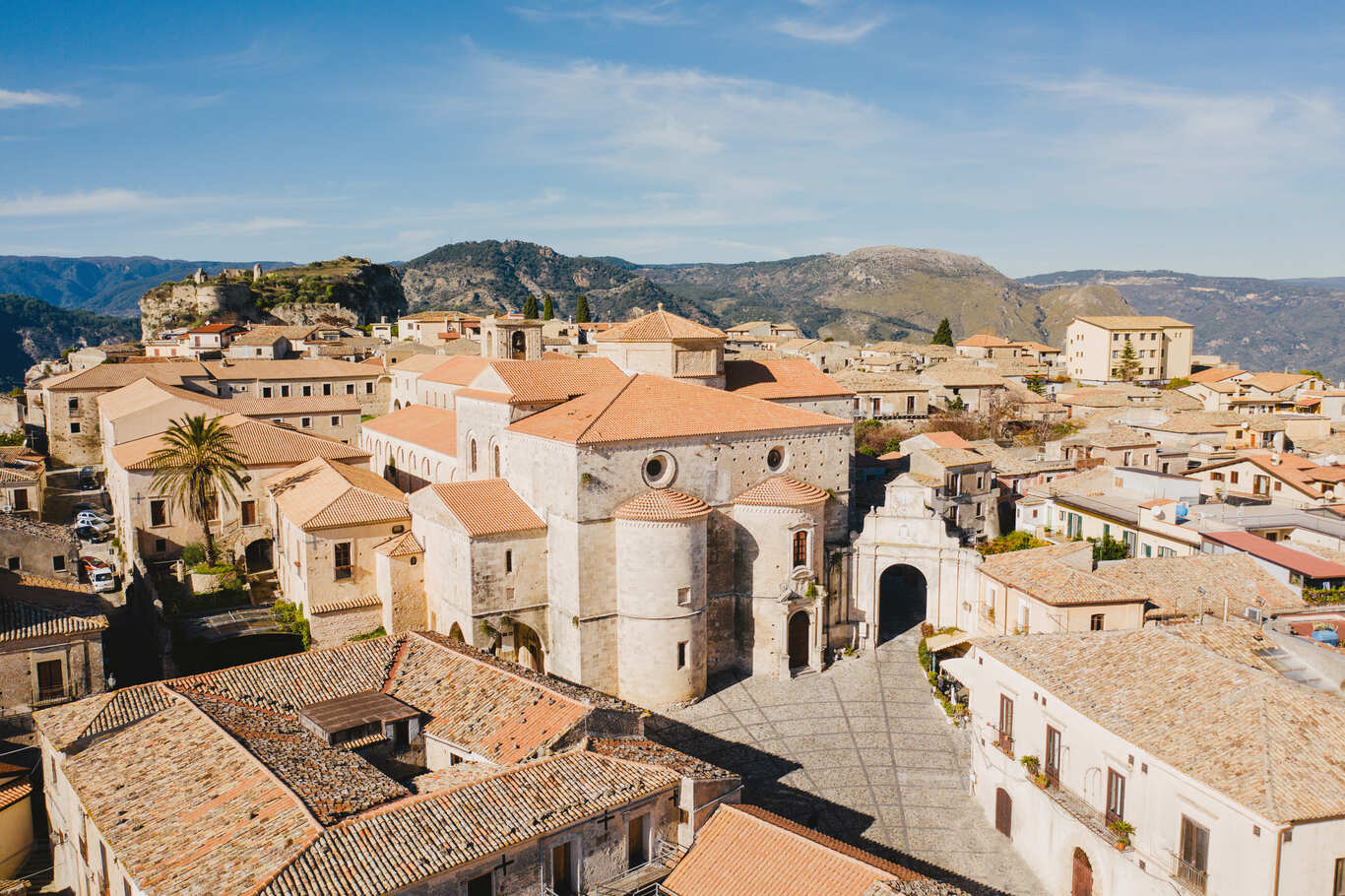
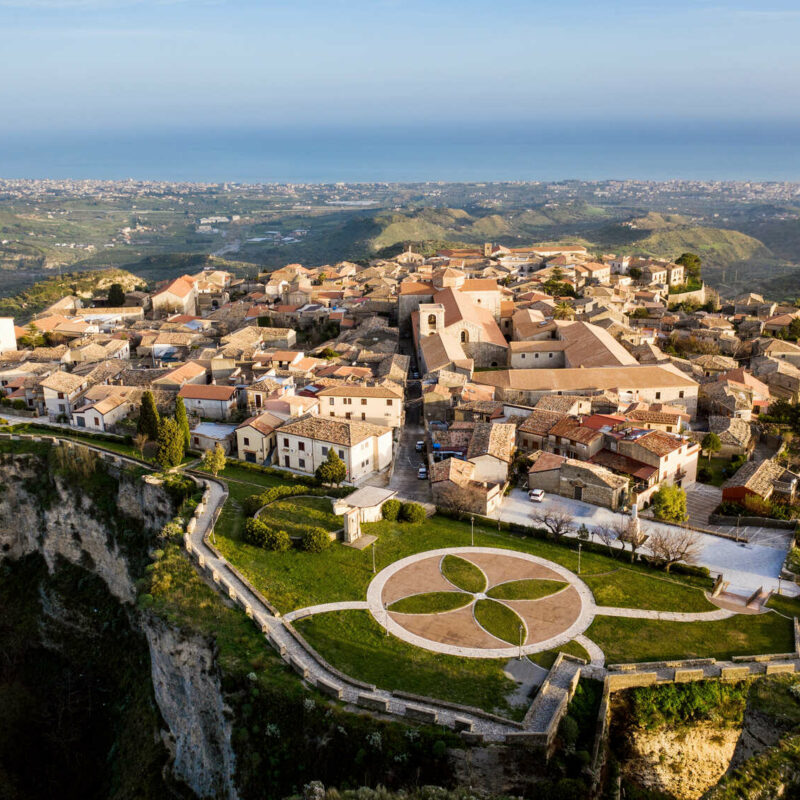
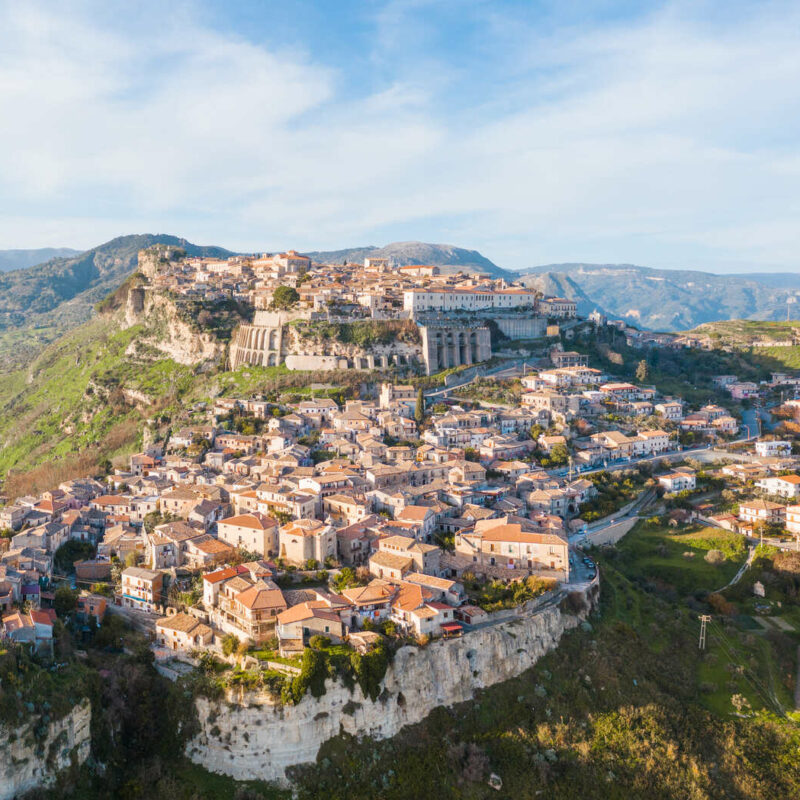
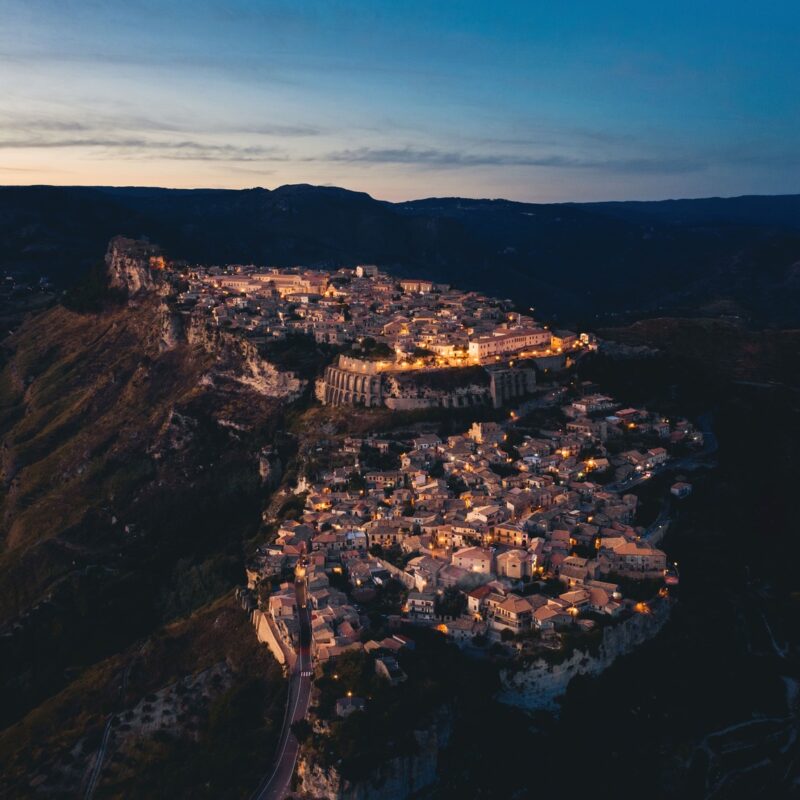
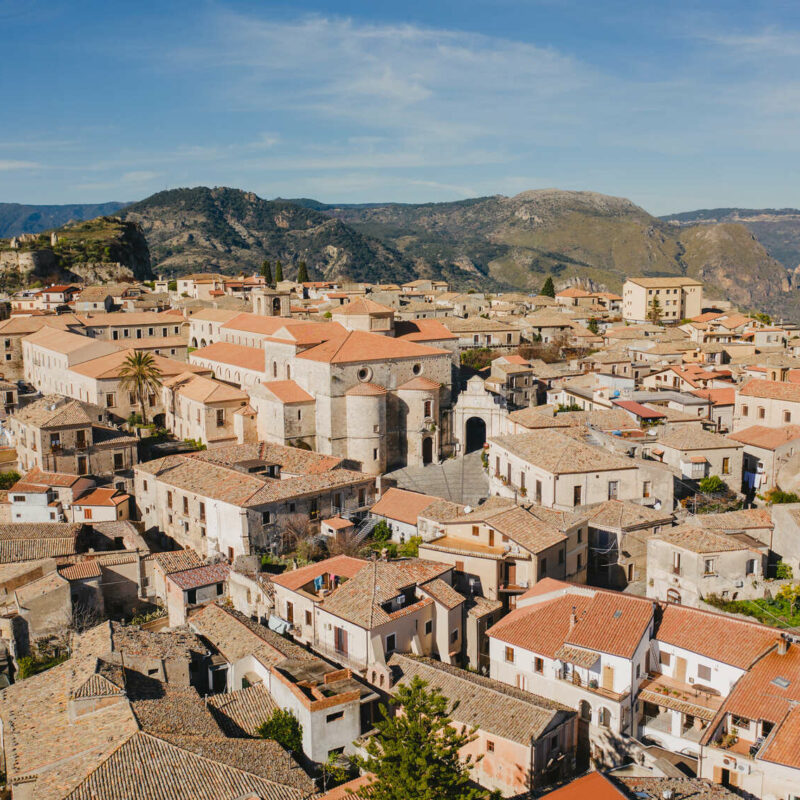
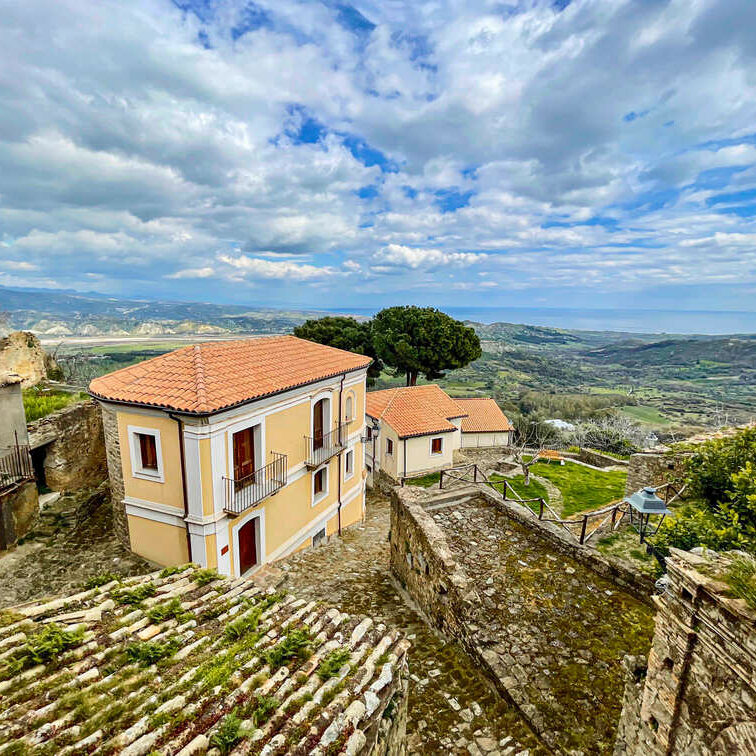
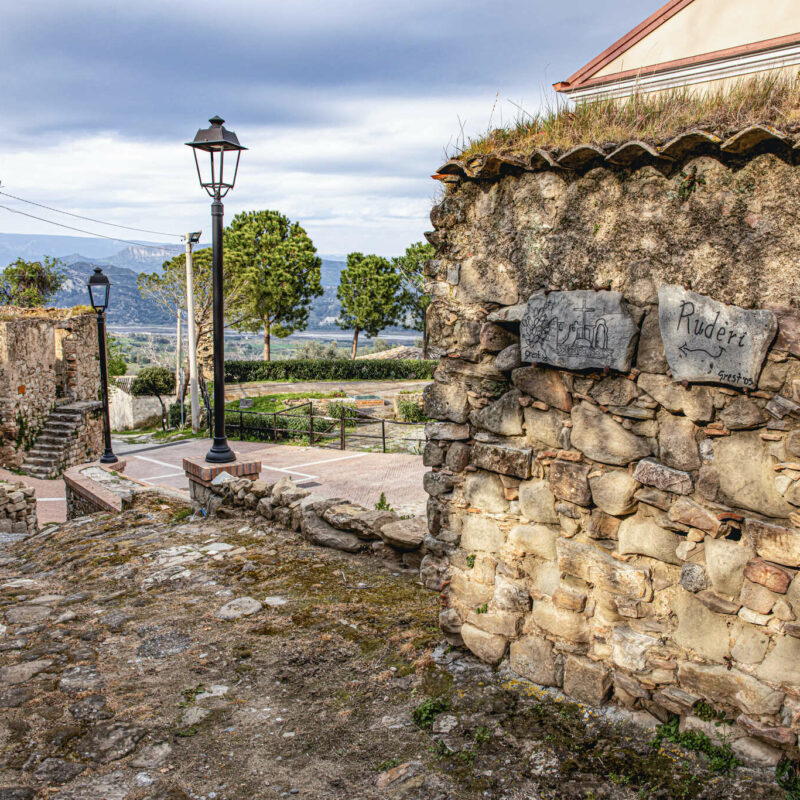
Off the beaten path of summer tourism, perched on a sandstone cliff, nestled in the Aspromonte National Park, stands the enchanting village of Gerace, which overlooks the Antonimina valley and from its privileged position offers exceptional views of the Ionian Sea and the Locride region. Its name, according to a well-established and suggestive tradition, would derive from the Greek Γεράκι (Falcon), the bird of prey that would have indicated to the survivors of ancient Locri Epizephyrii the position where the new village would rise, an hypothesis, however, refuted by those who argue that its origin would descend from the name of the Diocese of Locri, dedicated to Saint Cyriaca (Αγία Κυριακή in Greek). However things may stand, we know for certain that this area has been inhabited since ancient times, as evidenced by the remains of a necropolis not far from the town center, where pottery remains dating back to the 9th century B.C. were discovered, and that its fortune has derived from its particular position, which, like a falcon’s nest, dominates both the coast and the mountains.
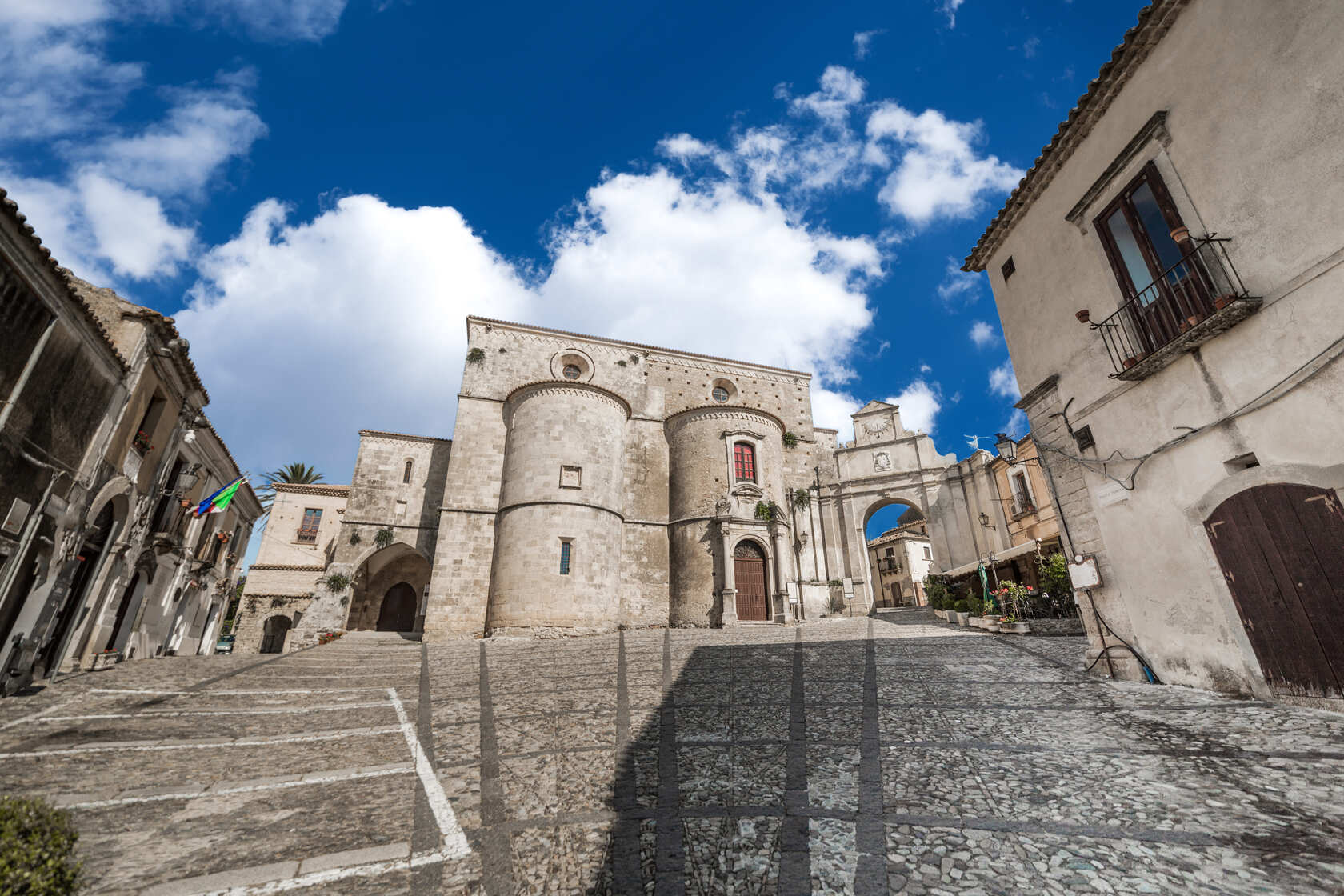
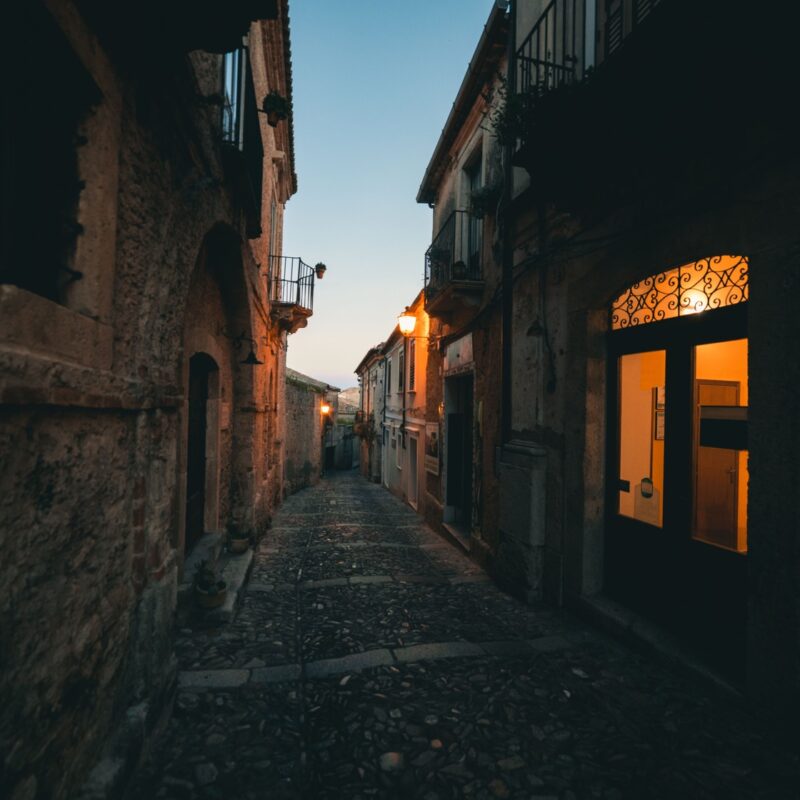
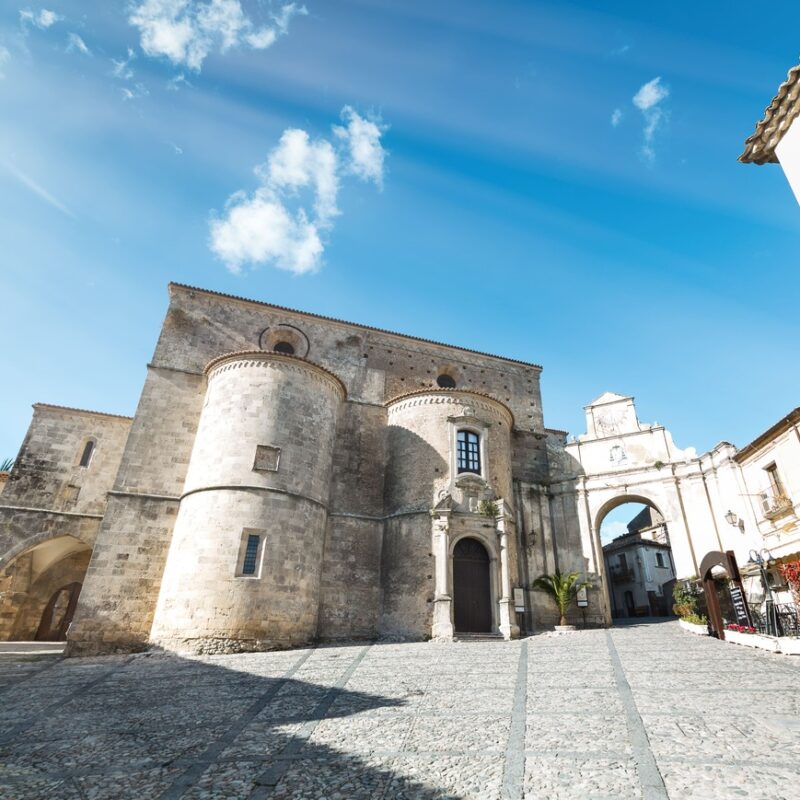
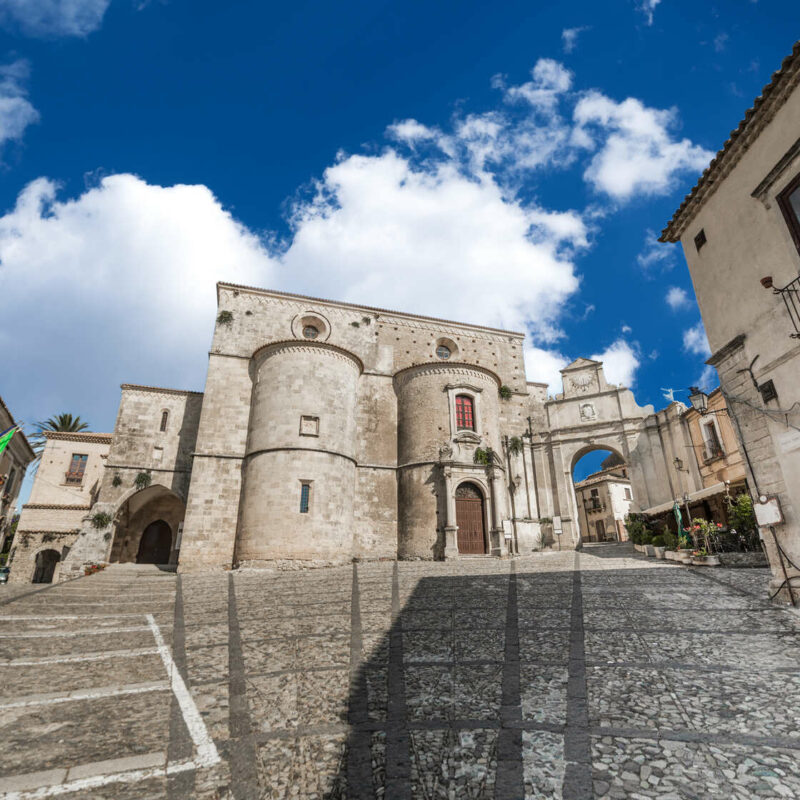
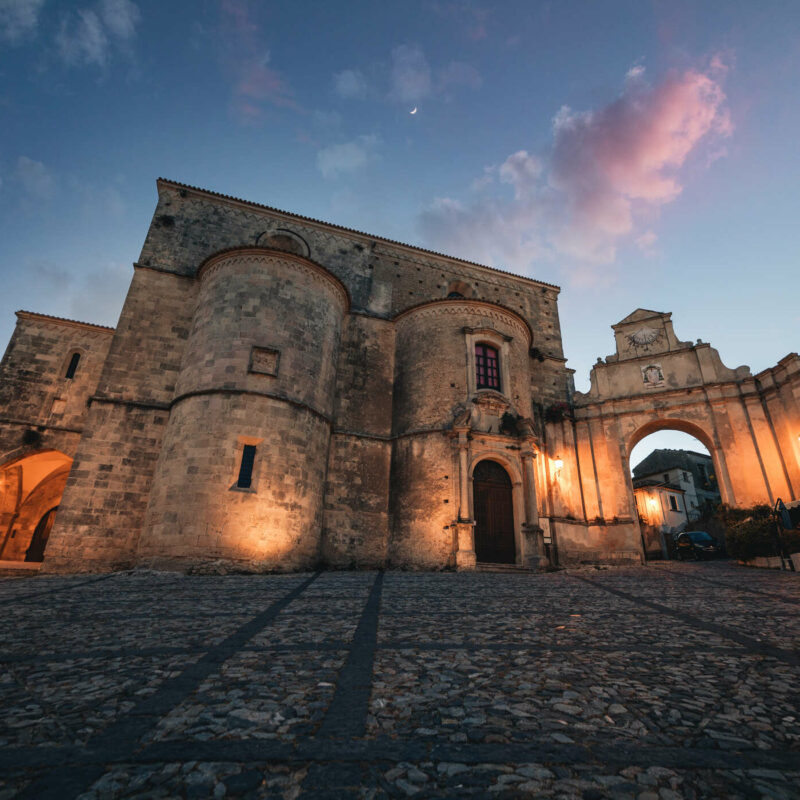
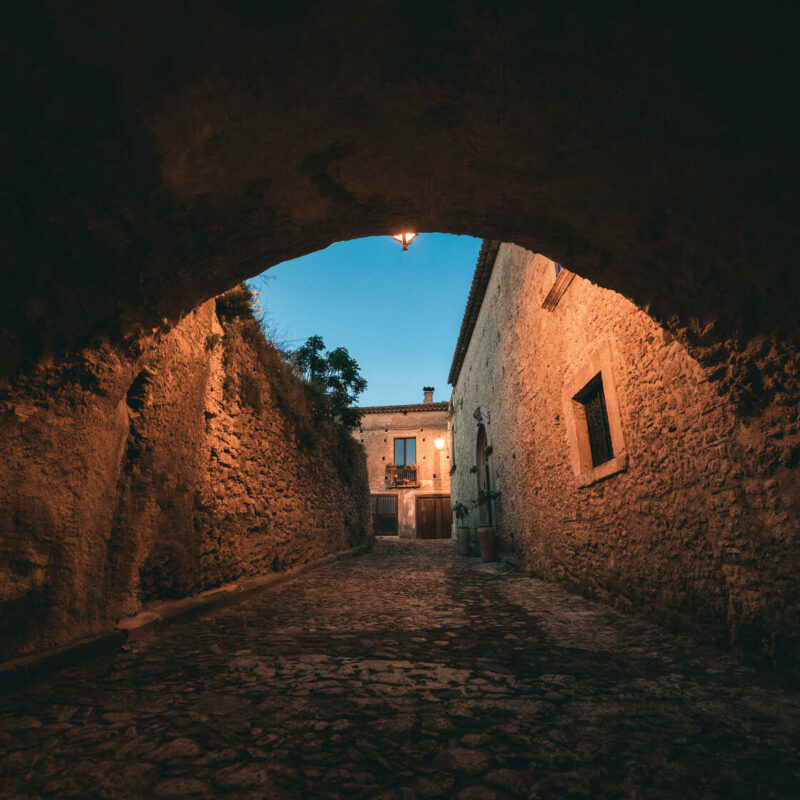
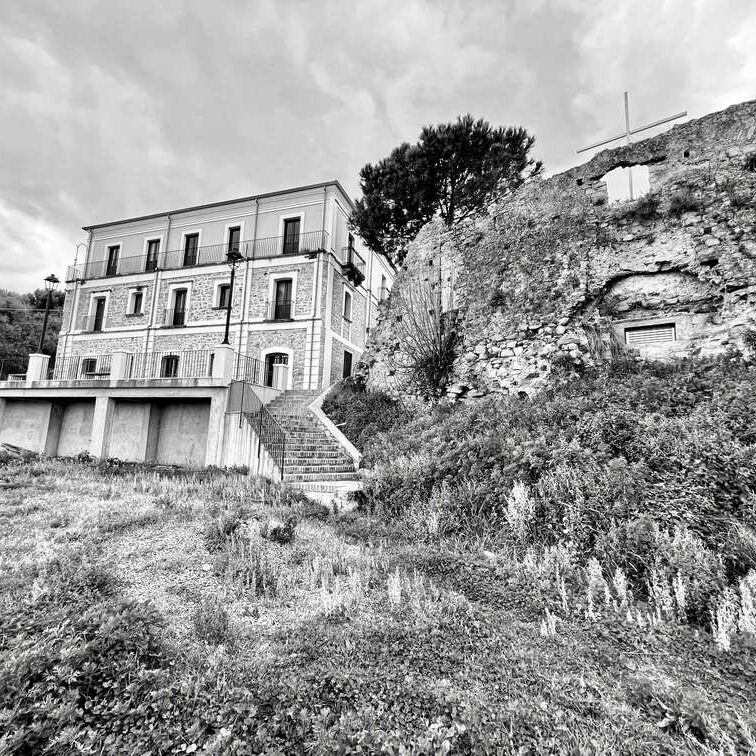
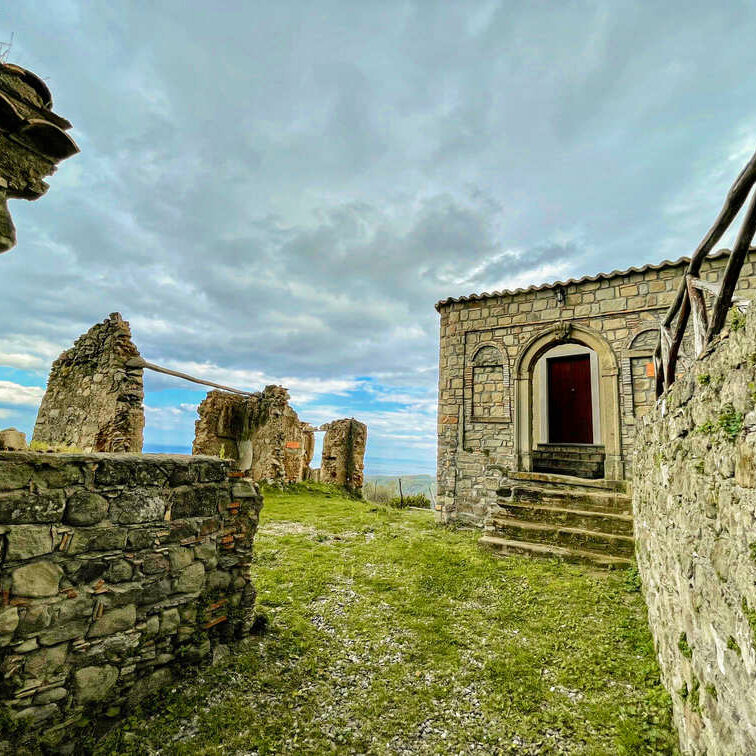
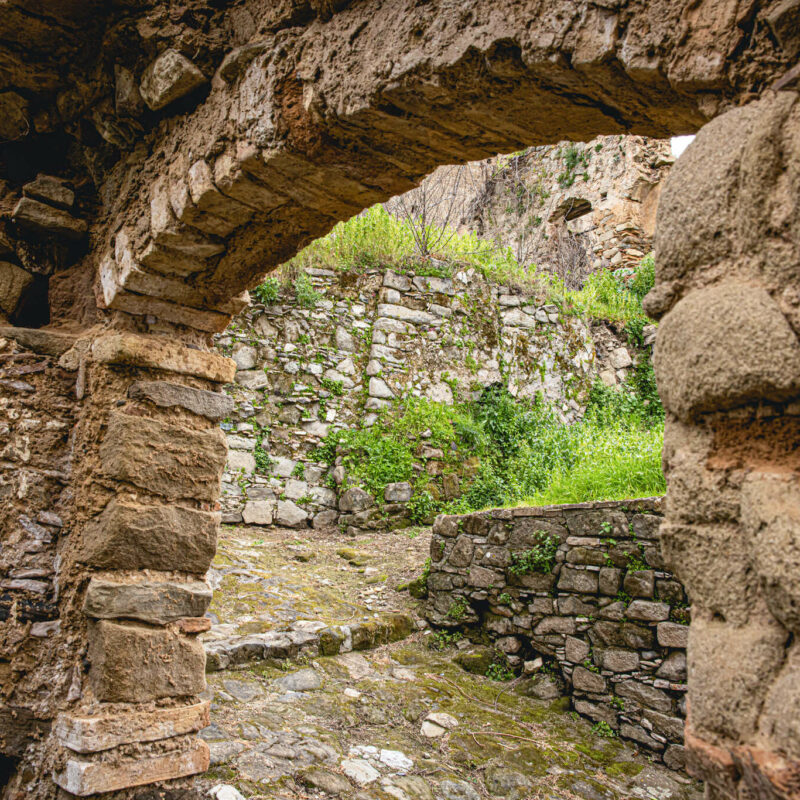
During the Middle Ages, the village became a center of fundamental importance in Calabria Ultra (southern or Greek Calabria), and a point of contact and conflict between Byzantines, Arabs, and Normans. It was the Normans who built the imposing fortress, the remains of which can still be admired in the historic center, which could be accessed through twelve gates and a drawbridge, now collapsed. Even today, visitors who venture through the alleys of the village can enjoy a magical atmosphere, a suspended time just like in fairy tales. Of the original gates that once opened onto the walls of the historic nucleus of the village, only four have survived: the Bishops’ Gate or Sundial Gate, Santa Lucia Gate, Main Gate, and finally, Sun Gate, the latter particularly appreciated by tourists for its breathtaking view of the valley below and the Coast of the Jasmine.
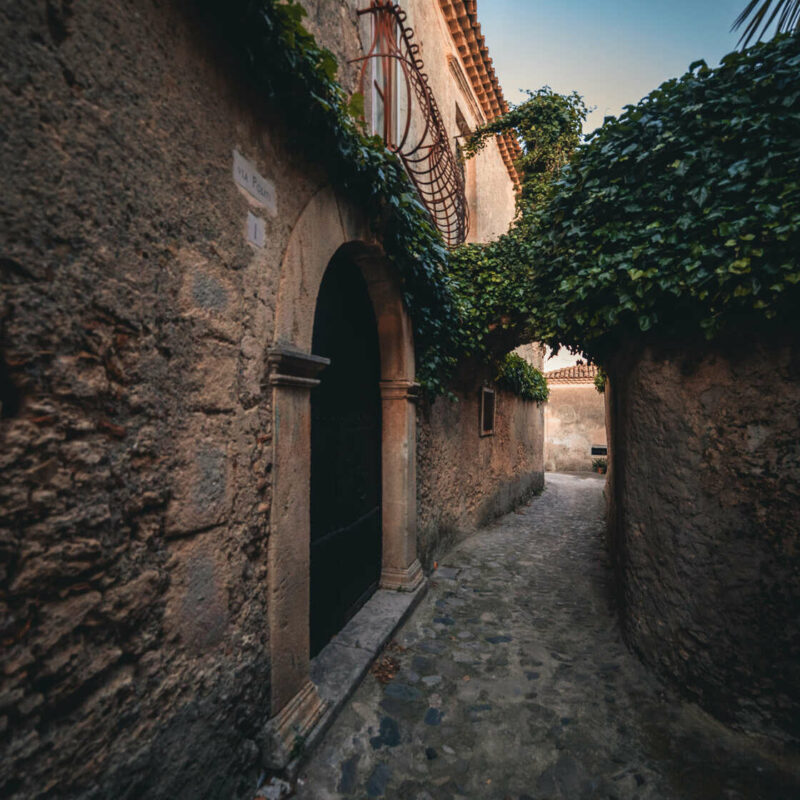
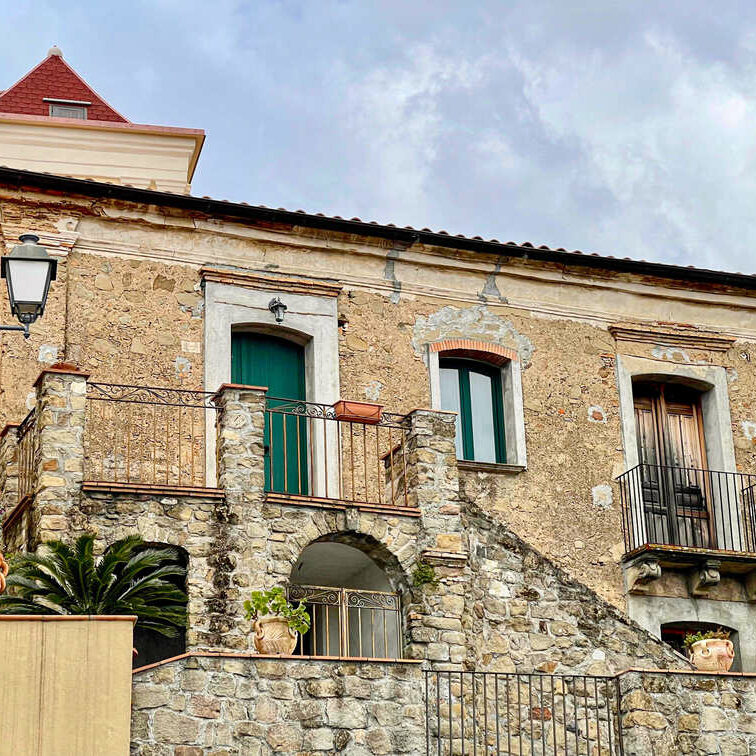
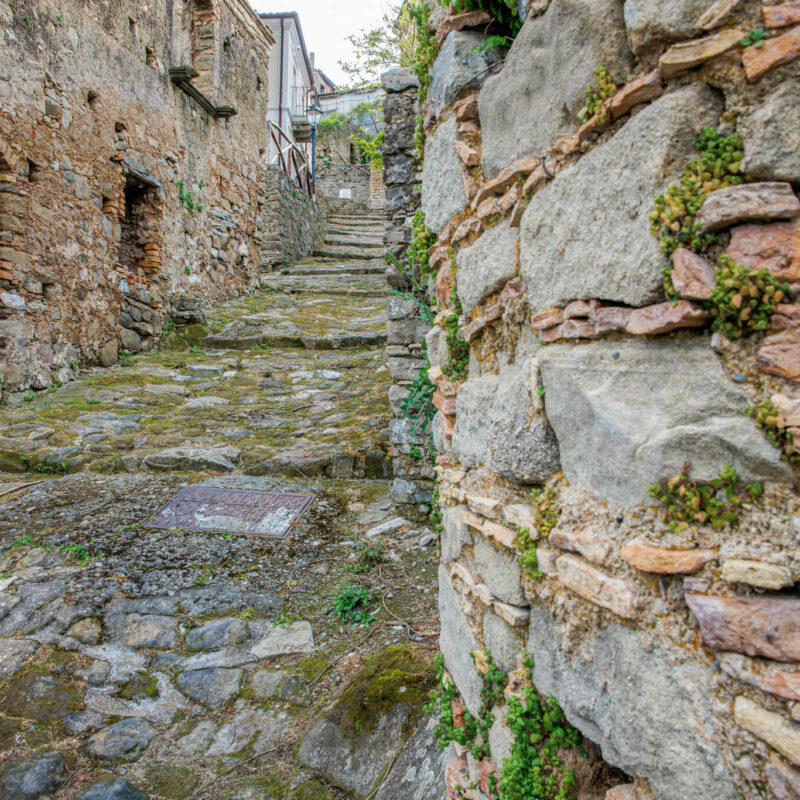
Walking along the internal streets, rare in their living stone pavement arranged in “cozzo” (vertically), built in such a way as to slow down rainwater and allow it to drain thanks to a particular angle, you can admire the beauty of the noble palaces and numerous barrel vaults, called “giustini,” for the unique technique with which they were made, throwing lime onto a bundle of reeds, similar to a traditional basket, here called “giustino.”
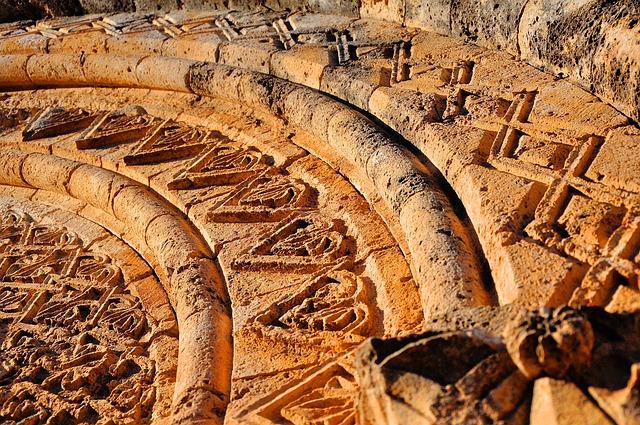
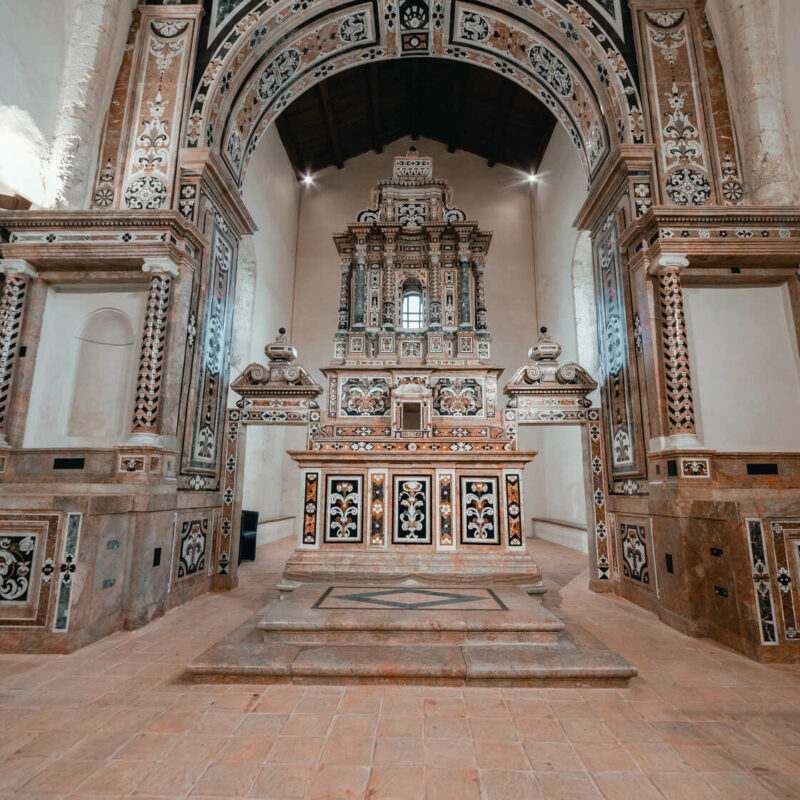
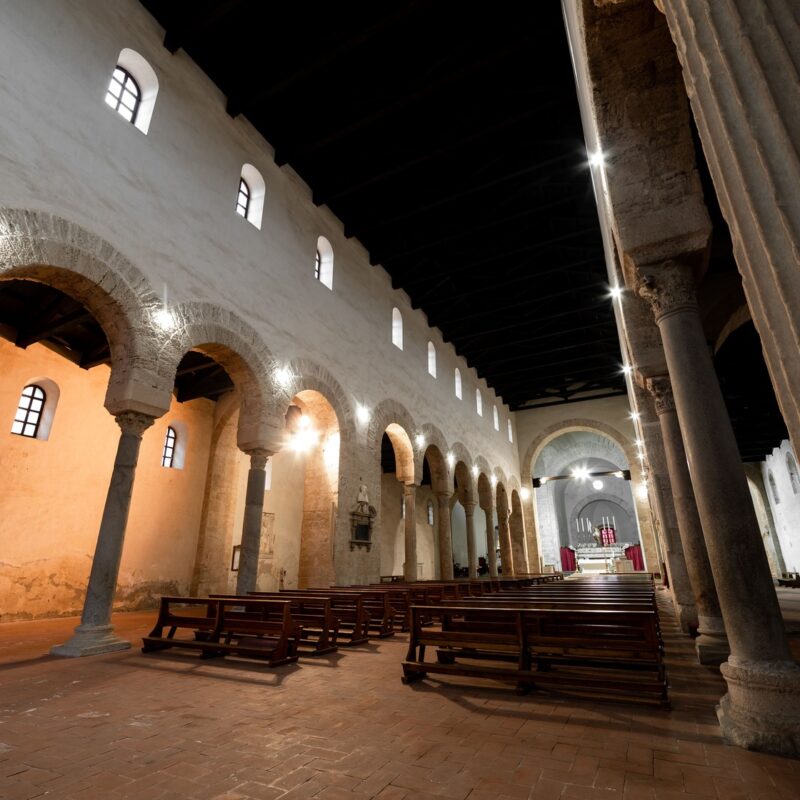
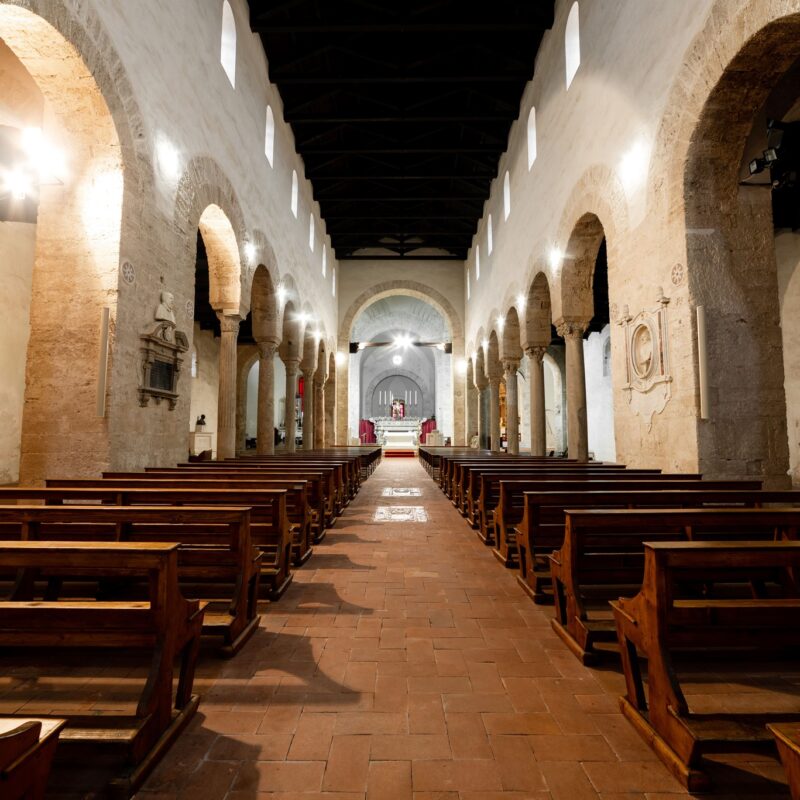
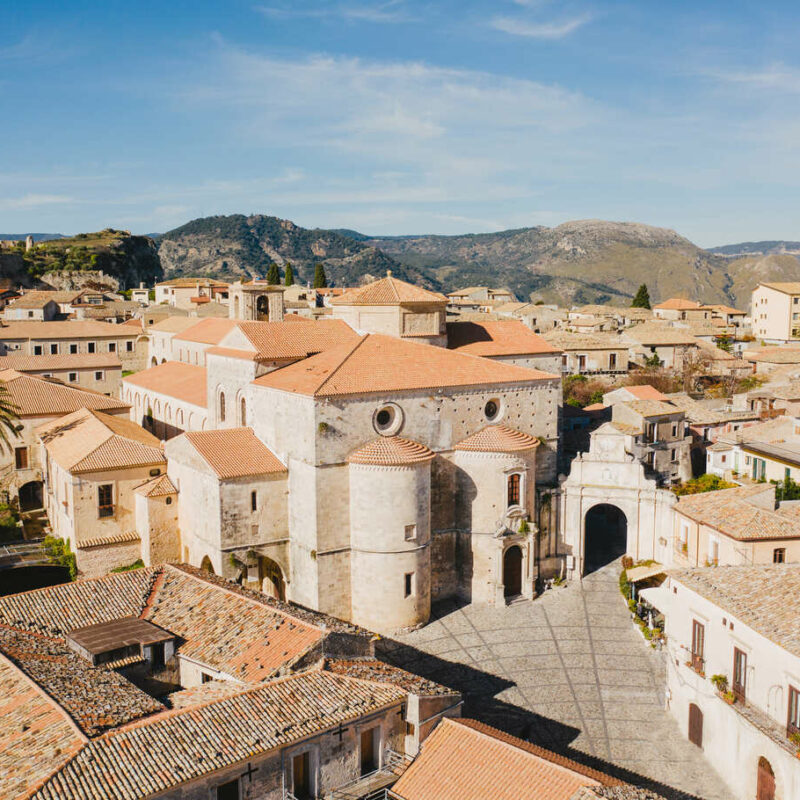
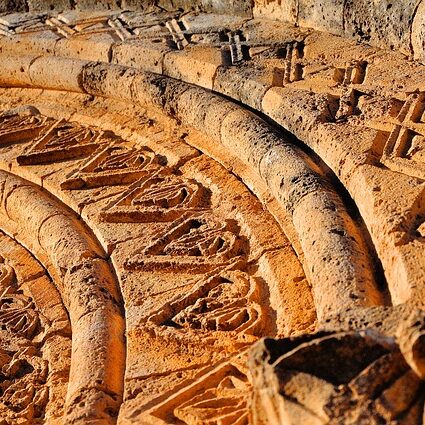
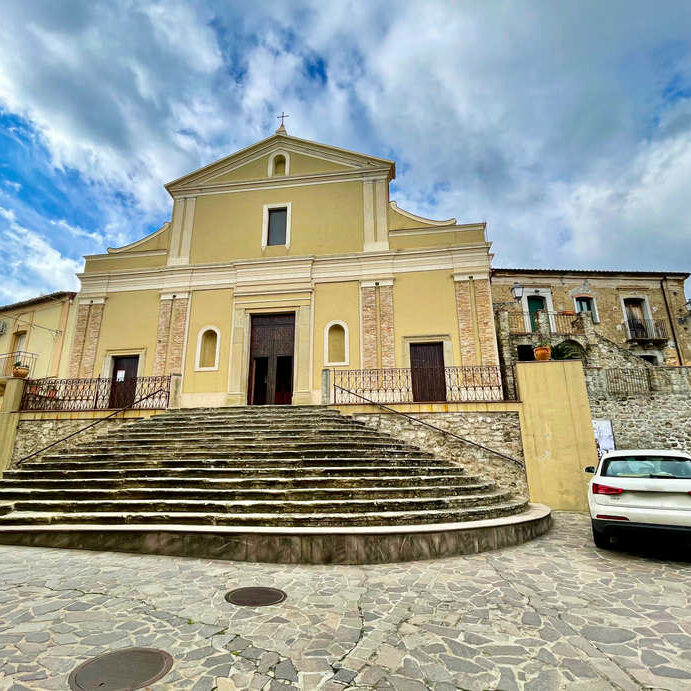
Continuing the visit, you reach Tocco Square, home to the Curia Civilis, the ancient local Parliament, consisting of nobles, bourgeoisie, and masters where the Caleopulo, Migliaccio, and Macrì noble palaces overlook the square, once past the civil square, you enter Tribuna Square, at the entrance to the Curia Episcopalis, the bishop’s seat, where stands the Basilica Cathedral of Santa Maria Assunta, the largest sacred building in Calabria at 1680 square meters, an authentic jewel of Byzantine-Norman style (consecrated in 1045), which, despite numerous renovations, especially after the disastrous earthquake of 1783, still retains the essential beauty of the original lines with which the Norman religious buildings merge with the Byzantine layout.
The City of One Hundred Churches
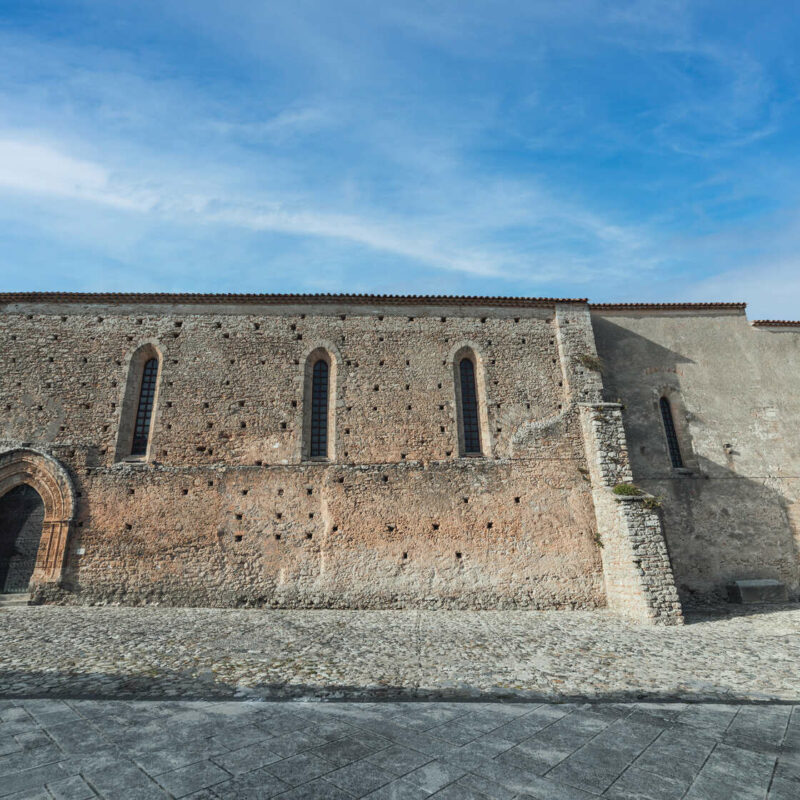
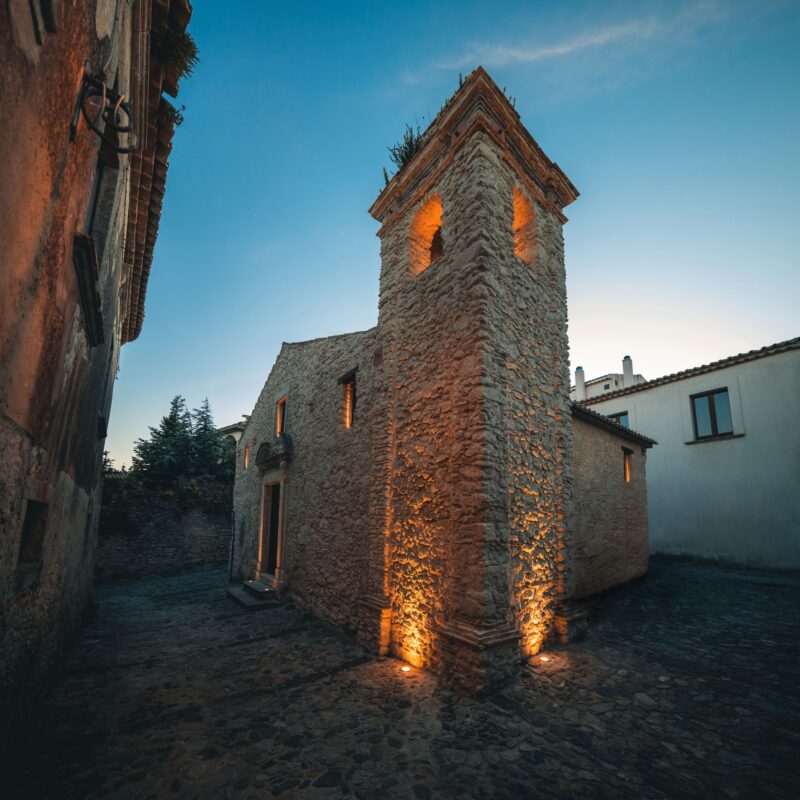
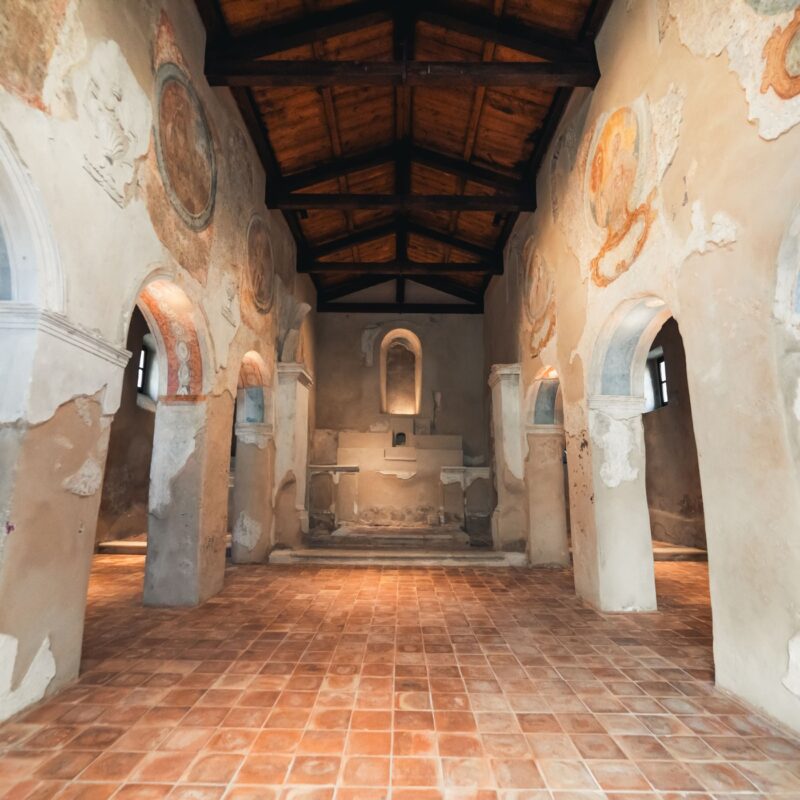
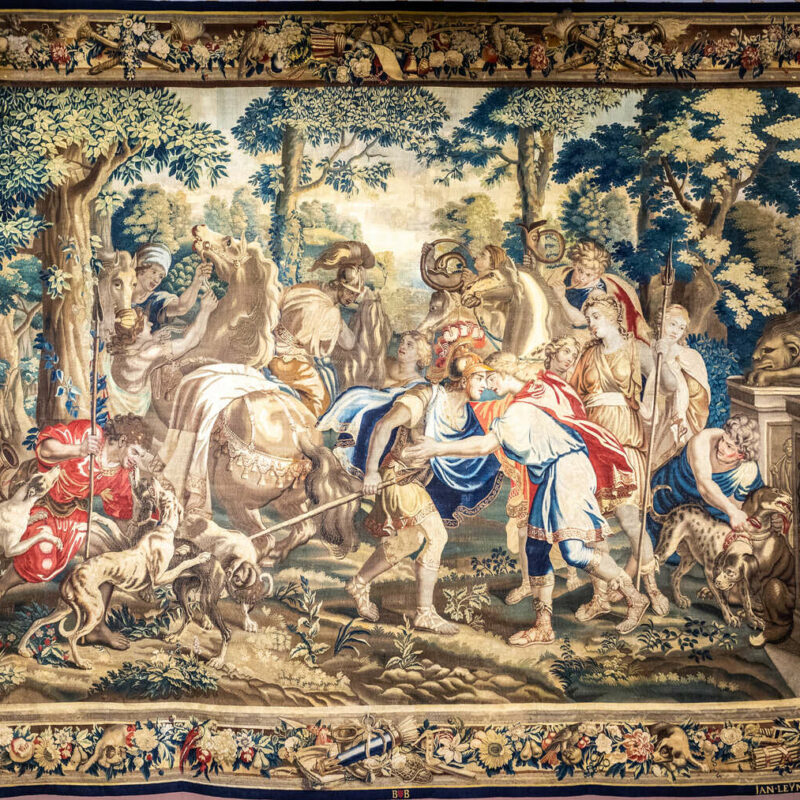
Under the Normans, Gerace was known as the city of one hundred churches, a number destined to increase over the centuries; according to some estimates, there were 128 sacred buildings built in the village, a number drastically reduced after the 18th-century earthquake; today, among those still open for religious functions, noteworthy are the Church of San Francesco, in Gothic style, commissioned in the mid-13th century by King Charles II, considered a national architectural asset; the Church of the Sacred Heart of Jesus, rebuilt after the 1783 earthquake by the Brotherhood of the Sacred Heart, still active today; the Church of Santa Caterina, from the Norman period, and the Church of San Giorgio Martire, which houses an oil on canvas from the 18th century by Francesco Saverio Mergolo, depicting St. Joseph with the Child and the Madonna in Glory among the angels, appearing to St. Blaise.
But the historic center continues to amaze visitors; slipping through the alleys reveals another treasure of Gerace: the caves carved into the rock of Borgo Maggiore, once the home of artisans who worked with clay, and still used today by local artists to pass down this artisanal tradition. If you happen to be in this area in July, the caves become the enchanting setting for the “Enchanted Village,” an event inaugurated in 1999, and since then has continued to be a huge success among holidaymakers from the Coast of the Jasmines and the inhabitants of the neighboring municipalities. During the festival, the streets are invaded by musicians, wandering bands, jugglers, tightrope walkers, stilt walkers, fire eaters, mimes, clowns, magicians, and illusionists from all over the world. At Christmas, on the other hand, the village turns into a living nativity scene, one of the most beautiful in Calabria, an event appreciated also because it has over time become an opportunity to enjoy typical products in a unique atmosphere, fresh pasta with goat sauce, to be enjoyed with an excellent glass of Greco di Gerace wine, representing an excellence with ancient roots, which certainly deserves to be visited and loved at least once in a lifetime.
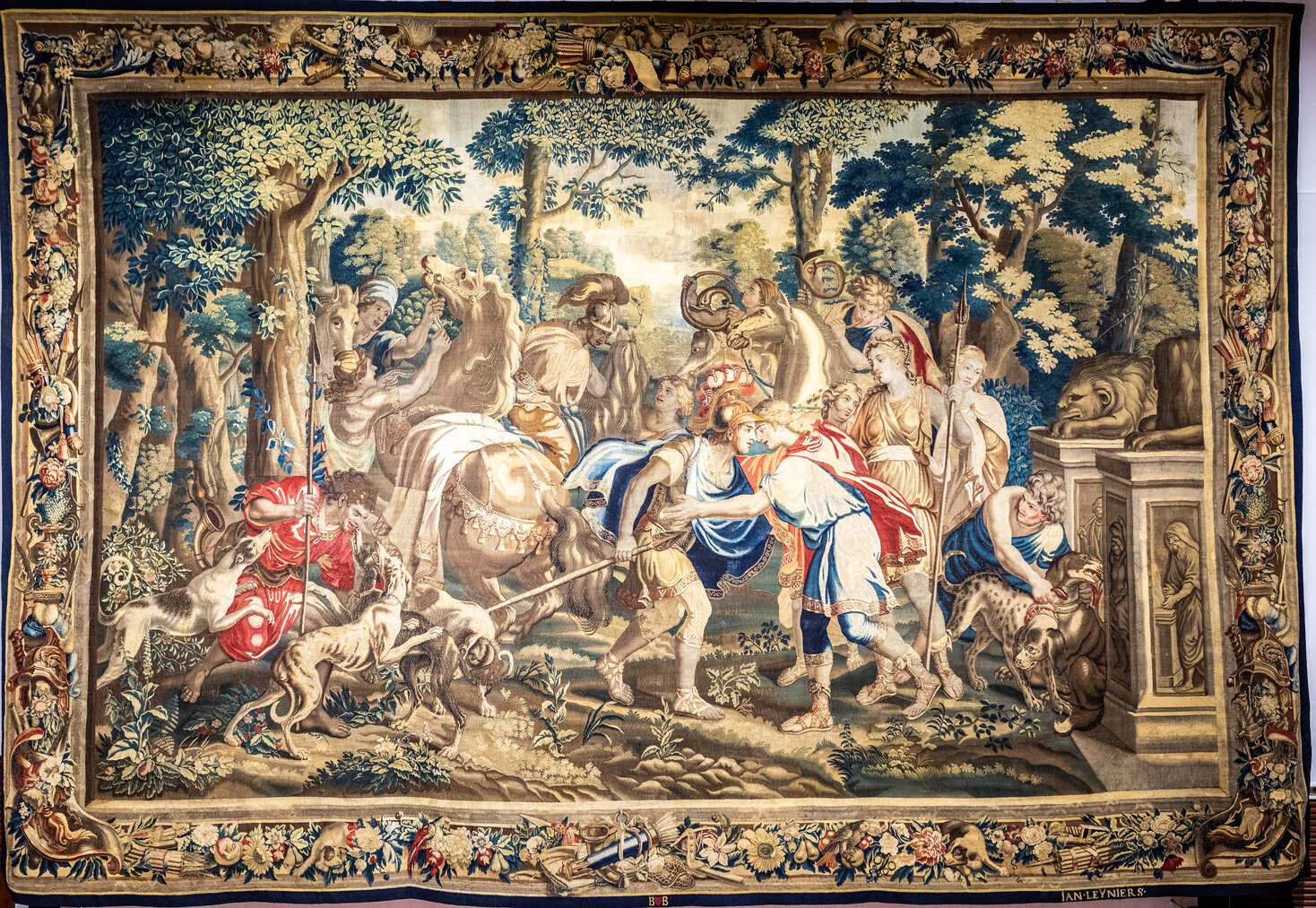
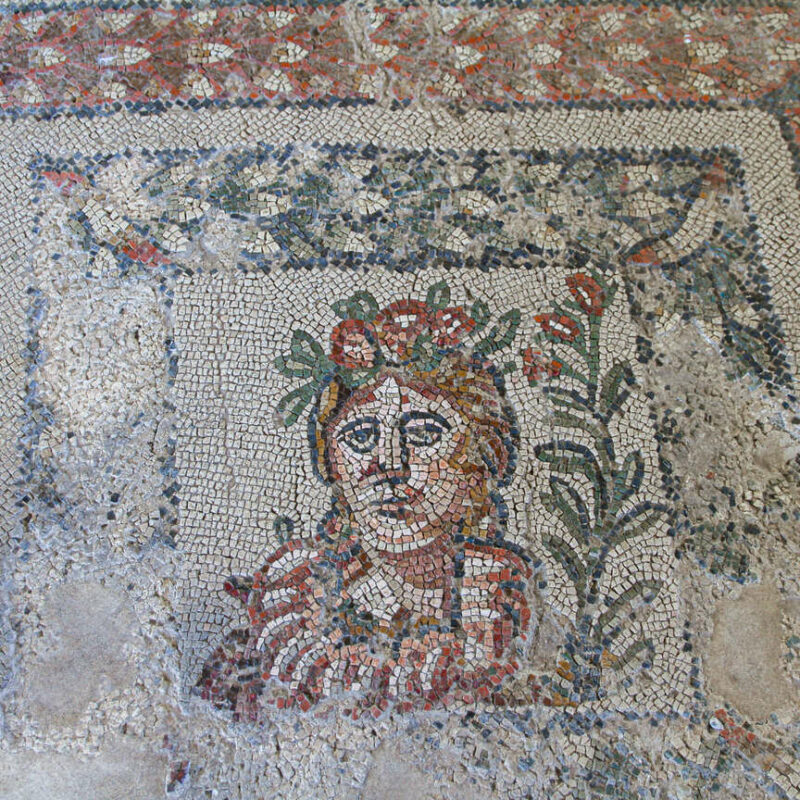
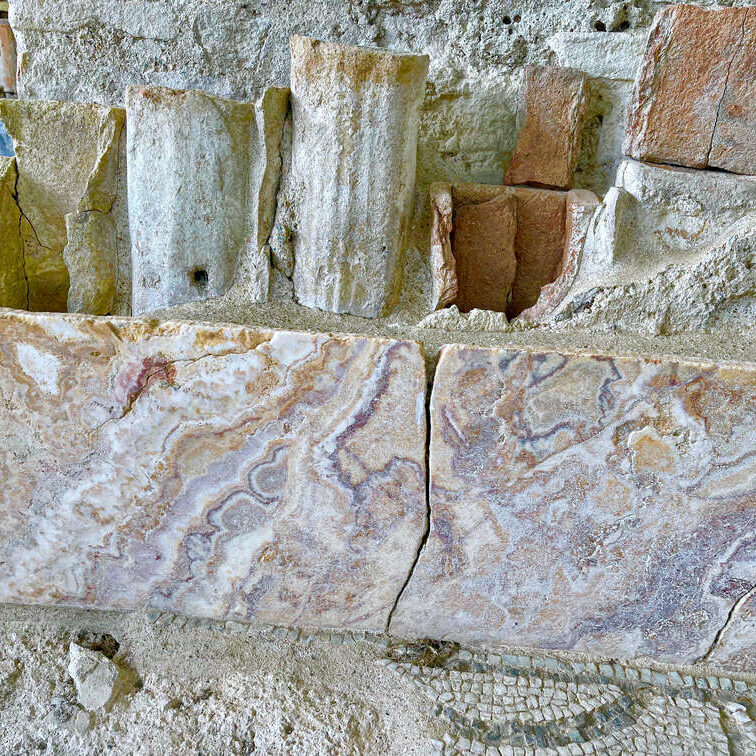
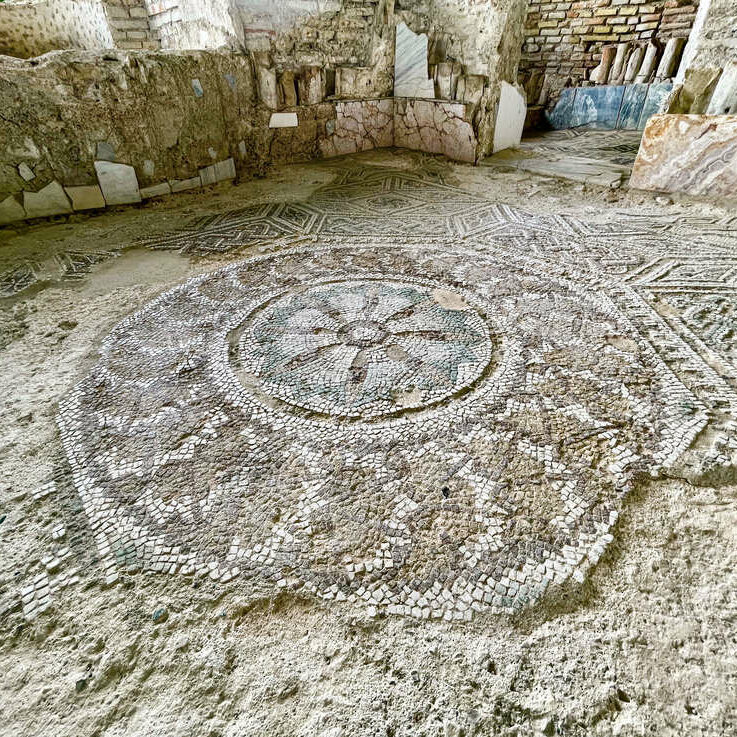
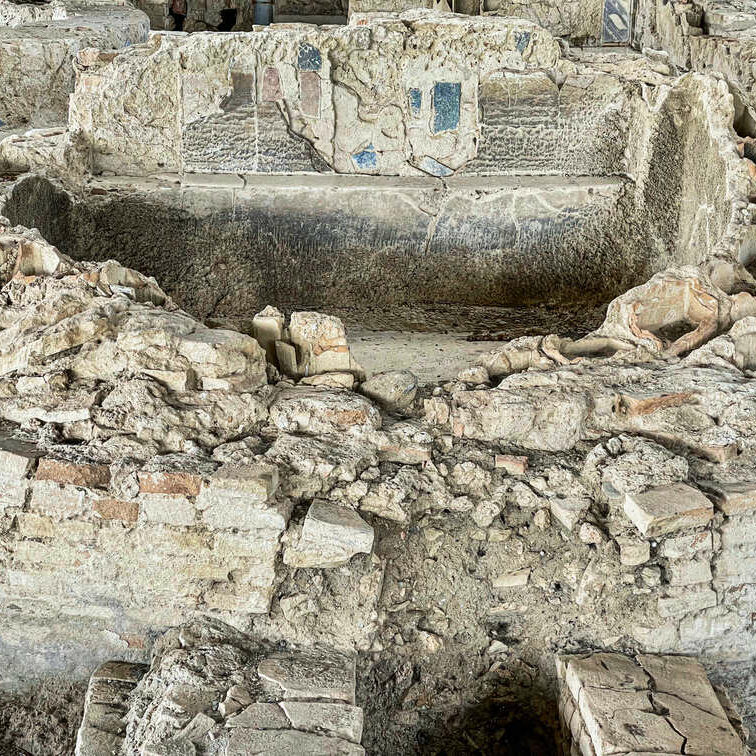
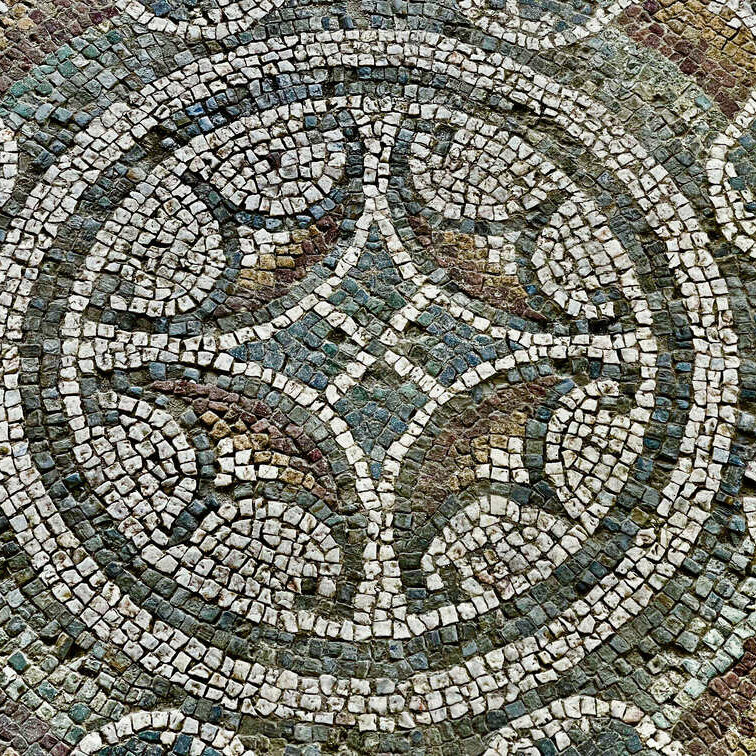
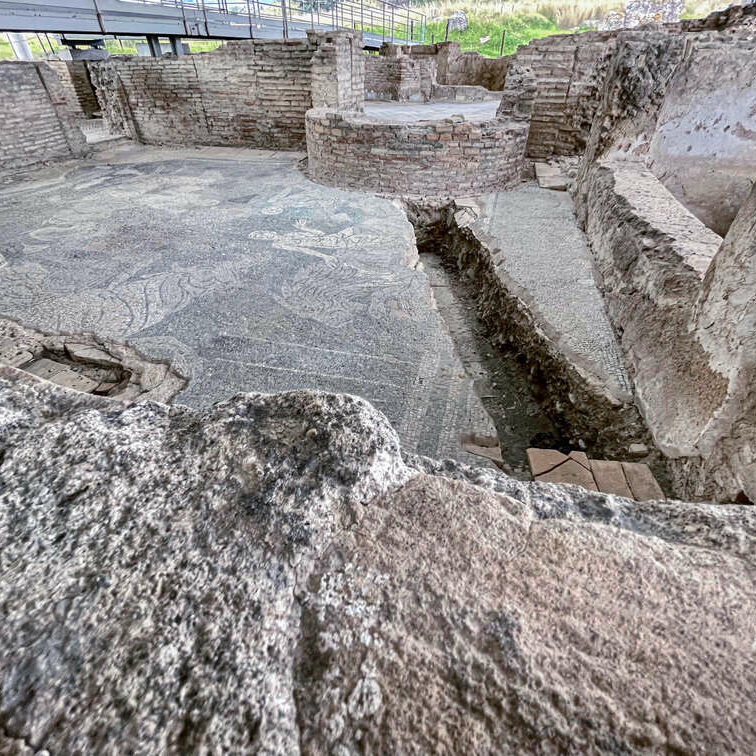
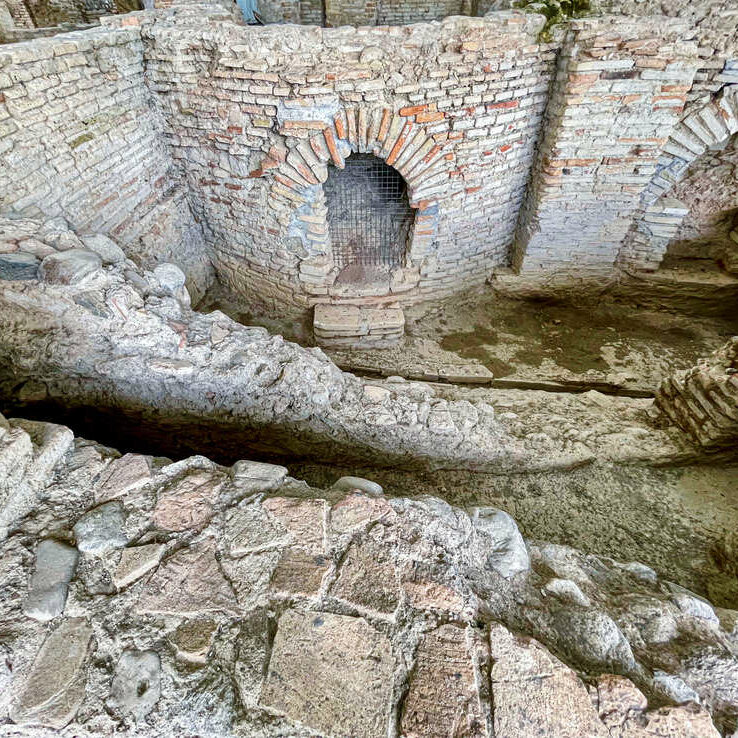
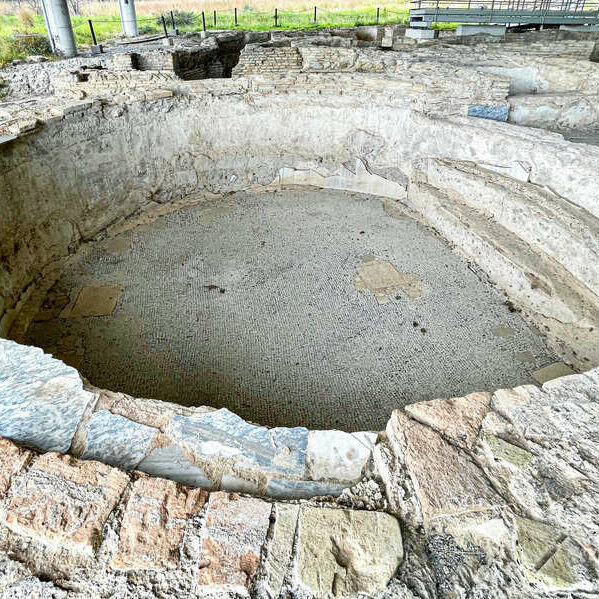
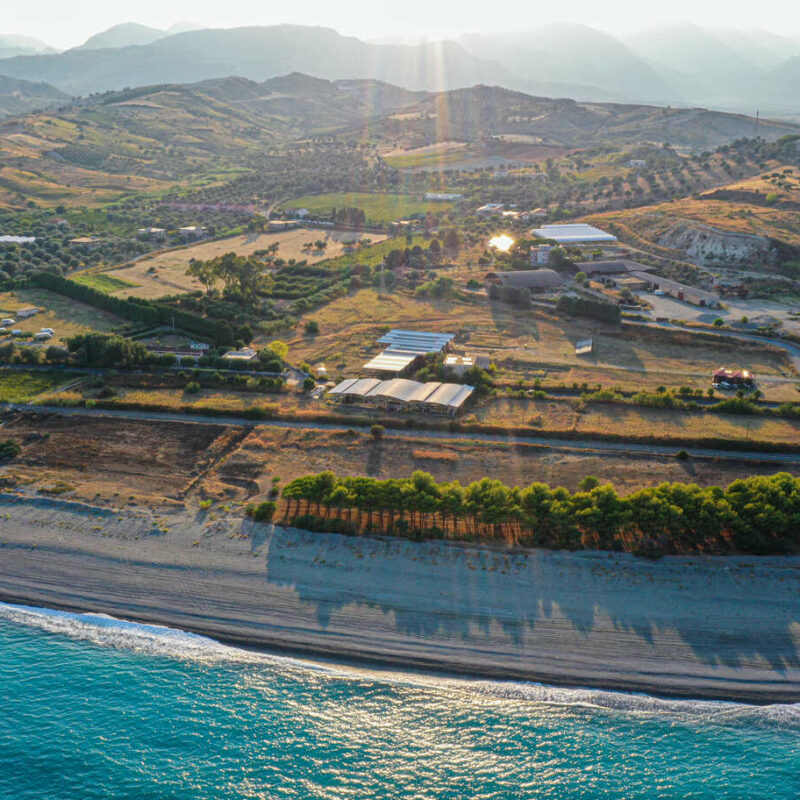
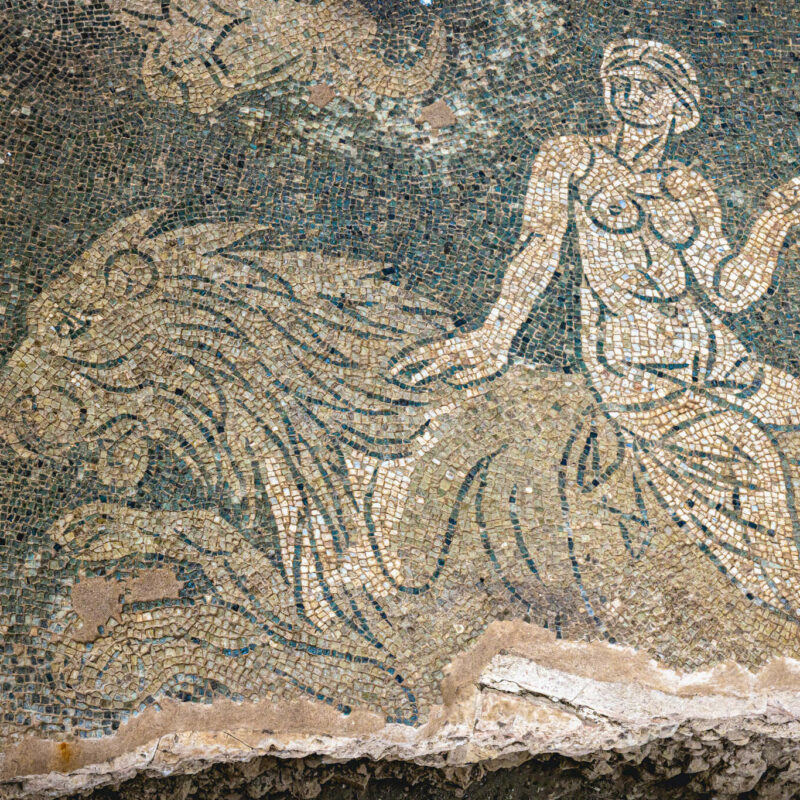
Not far from the village, on the Ionian coast (SS 106), in the Palazzi district (RC), lie the ruins of the Roman Villa of Casignana, the Piazza Armerina of Calabria, one of the largest complexes of Roman times in southern Italy, located on the ancient road connecting Locri Epizephyrii and Rhegion (Reggio Calabria), belonging to a very important patrician family probably linked to winemaking, a hypothesis based on the finding in situ of numerous fragments of Roman amphorae and some depictions present in the mosaics adorning the building’s rooms. Discovered in 1963, the Villa of Casignana, presumably built in the 1st century AD in an area already frequented in Greek times and which reached its peak in the 4th century AD, represents an important testimony to the stylistic richness, architectural sophistication, and artistic refinement of Hellenistic noble buildings.
Gerace Gallery
Casignana Gallery
CREDITS FOTO CASIGNANA:
Stefano Strati
Enzo Lacopo
CREDITS FOTO GERACE:
Polonio Video di Daniele Sgura